multiple topics?
Yes, we have two+ topics this week, and both will come in handy for your upcoming papers and discussions in this class and many others, not just English.
And really, this is the most important lecture of this class, so read it very carefully and look at the sample paper (link near the bottom).
1. looking stuff up
You already know that one purpose of college is learning. That does not mean re-treading things you already know. It is not about opinions you already have or interests you are already passionate about. You do not need to learn those things; you already have them. College is about discovering new things. That often involves having to search out informtion from the internet, from books and journals, in podcasts and videos, and so on.
I'm not going to go too much into how to search for information. I have a little video on it in the Readings on Canvas, but most of you search for all sorts of things every day on phones, laptops, desktops.
So what sorts of things are we likely to need to look up and why?
The practical answer is when we need specialized information for something we are doing (buying a car, building a deck, learning to sail, analyzing a difficult poem that has us stumped, preparing for a debate on whether or not the FDA should approve a new medication for asthma, trying to understand whatthe Schrodinger's Cat thought experiment really means).
let's focus on that debate because part of this class will feature some argumentation, and debates fall under that umbrella
We may not want to debate about this new medication (which we will call Breathe-EZ), but our speech teacher assigned it, and we are stuck with it; we do not want to fail speech.
Big Pharma assures the public they absolutely need this stuff. It is going to revolutionize asthma treatments, and it is just a fraction of the cost of Flovent, Asmanex, Serevent, Brovana, ProAir, Spiriva, and a whole bunch of other medications (can you tell I JUST had to do some research to find specialized knowledge?). The FDA is not so sure, and they are looking at the clinical trial results, the potential risks-versus-rewards, the actual costs, and so on.
Vinny (on the left) gets assigned the "This is a great medication" side of the debate, and Lily (on the right) gets assigned the "We should not approve this medication" side.
Here are Vinny and Lily, prepping for the debate:
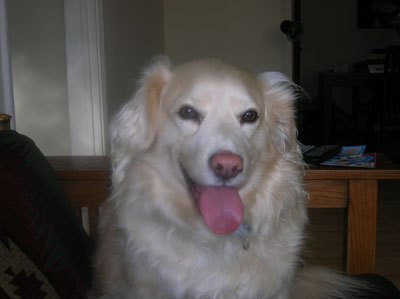
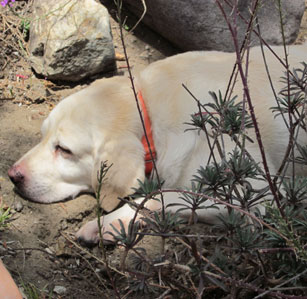
The day of the debate, both are about as prepared as could be reasonably expected. Neither is that thrilled with the topic, and both waited close to the day of the debate to begin, but away they go. First Vinny makes an empassioned and emotional plea for helping asthma sufferers. He shows a YouTube clip of someone short of breath using an inhaler. He states some marketing stats and very attractive costs from the pharmaceutical company, and he wraps up with a hearty, "Breathe-EZ must be approved."
Vinny's done a pretty good job, and Lily is feeling worried. She can't really counter that YouTube video, and she doesn't have much evidence relating to the stats. But she starts gamely. She talks about the need for caution and lots of trials, and just then, the door opens; a scientific looking (?) man in a lab coat strides across and stands next to Lily at the lectern. He shows his credentials. He was a clinical trials researcher for two decades for Harvard Medical School, later moved into a research position for the Center for Disease Control for twelve years, and has recently been contracted independently to do investigative research specifically on asthma medications, including Breathe-EZ. He takes over the microphone (I forgot to mention there is a microphone). "Yes, I am very familiar with Breathe-EZ. In over sixty clinical trials involving nearly eight-thousand asthma sufferers, the medication has proven to work in less than 1% of the cases. Also, the side effects, which are alarmingly common, include greater difficulty breathing, heart and liver problems, and, frequently, death." He shakes Lily's hand (paw), and he exits.
Wow! Lily is feeling a whole lot better, and she continues on. She is not sure how to handle the cost issue. She mentions that these are really just projected costs and is sort of waving her hands (paws) when the door opens, and in strides a professional-looking woman in a business suit. She takes the mic and shares her credentials: she has worked in marketing, accounting, finance for twenty-seven years, and she is currently hired independently to investigate the cost claims made by the people who make Breathe-EZ. "The costs cited in their reports are costs to manufacture the medication. The numbers do not include the delivery system, packaging, marketing, distribution. They also do not include mark-up." She gives a knowing smile and continues, "The actual cost to the consumer will be in the neighborhood of seven to eight times more than other common medications on the market." She shakes Lily's hand (paw) and strides purposefullly back out of the room.
so who is going to win the debate and why?
Lily blew Vinny away, not because she knew much more about her subject and not because she is a better speaker (writer). She will win this debate because she has credible, authoritative, expert testimony (evidence) backing her up.
In much of your writing (such as your discussions and your papers for this class) your job is to find credible, authoritative, expert evidence (that you quote directly…more on that in a moment) to support your general claims, ideas, and observations (remember we do not write just opinions) because you are not an expert and because you do not have enough in-depth, concrete, specialized information about the subject. And that information, the evidence, the examples will nearly always be in the form of direct quotations from your sources, quotations that you are going to credit with parenthetical citations and a Works Cited. because if you don't, you will be plagiarizing (therre are other reasons we document; that will come up in the second part of this lecture).
Most teachers will not let you use un-vetted, generic websites for sources such as Wikipedia, Ask, Snopes, (though they make a great starting spot for doing searches; they often have loads of links other sources in them). If the site is a reputable news site (say, New York Times online), or if you search a library database for acaademic journals, that is generally considered fine. But whacko.com, biased.net, fanaticnut.org, and justanopinion.edu are not going to be acceptable.
By the way, reputable print sources are good, and some teachers require you use only print sources; that is not practical in this online class BECAUSE YOUR SOURCES NEED TO BE ACCESSIBLE TO THE READER (that is to me and to the rest of the class). This was part of the orientation information on the Writing Assignments Information page, right below "Just who are we writing for?"
so how do we get the experts to come up to the microphone?
Well, we don't. But we can search out what experts have said or written on the subject we are writing or speaking about, and we use their evidence/examples to help back us up. We do that by finding specialized examples (things we would not know if we did not do the reading as in the clinical trial numbers and cost figures above); we quote the examples directly, word-for-word; we credit the source.
NOTE: Most teachers will not let you use un-vetted, generic websites for sources such as Wikipedia, Ask, Snopes, (though they make a great starting spot for doing searches; they often have loads of links other sources in them). If the site is a reputable news site (say, New York Times online), or if you search a library database for acaademic journals, that is generally considered fine. But whacko.com, biased.net, fanaticnut.org, and justanopinion.edu are not going to be acceptable.
By the way, reputable print sources are good, and some teachers require you use only print sources; that is not practical in this online class BECAUSE YOUR SOURCES NEED TO BE ACCESSIBLE TO THE READER (that is to me and to the rest of the class). This was part of the orientation information on the Writing Assignments Information page, and WHY is further explained in part 2 of the lecture.
How do we Cite?
There are two ways:
in the paper itself, after every direct quotations or specialized piece of information such as a statistic, we must follow it with a parentheical citation
at the end of the paper, we must include a Works Cited page that gives us complete informtion about all of our sources that we cite
Here is an example of a correcctly-cited bit of source information:
And here is what that looks like in an excerpt from an actual essay:
excerpt from an essay with parenthetical citations and a Works Cited page
So the student writes a number of statements about Beanie Babies in that paper (the entire paper is about six pages); the paper is dotted with direct quotations containing specialized information from several sources. Each of those direct quotations (in quotation marks) is followed by a parenthetical citation (explained in the MLA Sample file you printed out; if you didn't, please do so, or you will not know how to do this), and then the student wrote more using her own voice (words).
2. Mini-lecture: The Logic of MLA 9 (yes, it is logical)
Background
A lot of students question "why this?" and "why that?' and "why is this so nit-picky?" with standard MLA format (really, with any standard college manuscript format). I get that, and I've been with MLA since MLA 1, back in the days of typewriters, and it has changed (but so has the world).
Fundamentally, though, the goals have always been the same:
- You need to credit work from other sources (or you are plagiarizing); that other writer did the work and deserves recognition.
- Your reader has a right to look at what you've quoted (did you skip things to change the meaning? And maybe the reader is just interested and wants to read more of the work you quoted from.
And so the in-text parenthetical citations accomplish 1. above. "Blah blah blah" (Winters 27), means someone with the last name of Winters wrote this on page 27 of some source, maybe a magazine article.
The Works Cited entry that MATCHES that citation accomplishes 2. above. It gives all the information your reader needs to actually locate that source (in a library, online, wherever). And many things you need to do make that easier. For example, that Works Cited entry must start with Winters (to match the citation), and the Works Cited entries must be in alphabetical order based on that thing in the parenthetical citation so it is easy to find in a long Works Cited (and they can get pages long, though not in this intro class).
Sure, I could write about the history of MLA (and APA and CMS and ???), but I'll only do that if requested. It is pretty dull stuff (duller even than this). Instead, I'll bring us up to 2016; that's when MLA got fed up and made some radical (well, for an English teacher) changes. They invented "containers."
Here's what was going on: the world WAS changing, and more information was coming from online sources. Folks were avoiding the research libraries and scanning the internet for books, articles, videos, images-anything. MLA 5 & 6 did their best to keep up with the times, but new source types were popping up quickly:
"How do we document Snap Chat? Twitter? Twitch? Facebook? blogs? vlogs?" and on and on, and they were tired of making up special rules for everything that would just be outdated almost immediately.
So at three of their annual conferences (they have conferences to discuss this stuff, well, that and to party), they broke Works Cited entries in their fundamental components:
- Who? (Who created this information? And the answer in the 21st century especially might be, we have no idea; it's not listed)
- What? (What is the work being quoted from? Is it an article, a book, a video? What's the title?)
- Where/When? (Where can this be found? In a newspaper? Is that newspaper online or on paper? How current is it, and where can I find this if it's online?)
As noted, sometimes a container is MISSING INFORMATION, and the simplest solution for dealing with that is what they chose: LEAVE IT BLANK! If there is no author's name; leave it blank. If there is no date given, leave it blank, and so on.
Simple.
In the old days we didn't just leave it blank; it was more complicated, and it was pretty silly.
But what do those containers look like? Here's a simple book example:
Klosterman, Chuck. But What if We're Wrong? Penguin Books, 2017.
- Who? Chuck Klosterman (last name first for alphabetizing)
- What? But What if We're Wrong? (book title, always italicized, and I left off the sub-title, which is fine and simpler)
- Where/When? (Penguin Books from 2017, and publishers and dates are important because things come out in new editions with changes)
And here's what would go in the parenthetical citation (always the FIRST THING on the Works Cited entry): "Something, something, something" (Klosterman). Your reader can find Klosterman LISTED FIRST on one of the Works Cited entries, and it will always be alphabetized with the "K"s (simple).
OK, that's a super simple one, but what about the wonky ones? Let's say we are looking online and find an article from an online newspaper; no author is named, and there is a date listed. That might look something like this:
"Five Nights in Georgia." The Daily Mail, 7 Apr 2021, dailymail.edu/five-nights/story.htm.
- Who? (we have no idea, so we left it blank; we DO NOT put Editors of Daily Mail; that is NOT an author's name. There are such things as corporate authors, but we are keeping it simple)
- What? "Five Nights in Georgia" (article titles are always in quotation marks, even in the body of your paper; that is a rule of English, not MLA)
- Where/When? The rest of that information (it is found on The Daily Mail website; it is from 7 April-we abbrev months to 3 characters, so Apr) 2021, and it can be found at that URL, which has no https:// and is not an active hyperlink-blue/underlined)
And here's what THAT looks like in a parenthetical citation: "This, that, the other" ("Five Nights in Georgia"). Your reader can find "Five Nights in Georgia" listed at the beginning of one of the Works Cited entries, and it will always be alphabetized with the "F"s (simple).
One more example: so you are reading a book called Secret Extra Credit by John Corbally and published by Nonplussed. In the book he writes, "To earn the five extra credit points, all you need to do is email me at jrcorbally@gmail.com and write 1) your name, and 2) that you found the secret extra credit near the end of the this lecture" (Corbally). Oh, and I'll put in a fake Works Cited entry below.
Is that all there is?
No. There are other things:
We do not alphabetize "A" or "An" or "The," so "The Day is Young." In a work with no listed author, would be alphabetized with the "D"s (I can explain the logic of this, but this mini-lecture is running long already)
Numbers get put before the "A"s when alphabetizing, so "20 Best Songs." in an article with no author listed, would go before a Works Cited entry beginning with Austin, Steve.
Images (and tables) are done a little differently, and there are options.
But you have the basic logic of MLA 9, and sometimes you can be a bit flexible with what goes (or doesn't) in those containers.
"Five Nights in Georgia." The Daily Mail, 7 Apr 2021, dailymail.edu/five-nights/story.htm.
Klosterman, Chuck. But What if We're Wrong? Penguin Books, 2017.
FINAL NOTE/EXAMPLE: Here is a Sample Student Paper with highlighting that shows correct MLA 9 paper format and correct MLA 9 documentation format. The highlighting shows how you work in quotations/citations and how those match the associated Works Cited entries. Your papers will NOT have highlighting; that is just to make it easy for you to see all of this. Your 100-point paper WILL require you to have about that many quotations/citations from sources (about 1/3 of each paper), and it shows you how to work in both in-line (shorter) quotations and block (longer) quotations.
![[103 home]](btnxanim.gif)
![[class schedule]](btnhour.jpg)
![[writing assignments]](btnhwrk.jpg)
![[discussions]](btndisc.jpg)